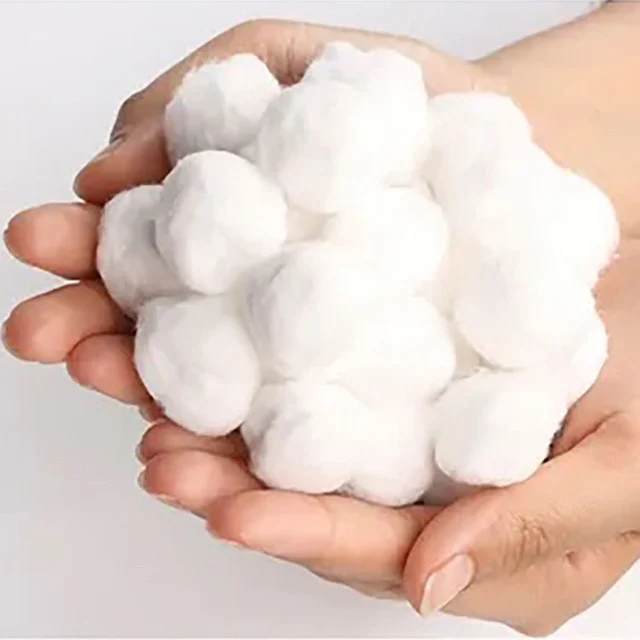
Your Premier Destination for All Cotton Ball Needs
The production of medical-grade cotton involves several steps to ensure that the cotton is pure, sterile, and suitable for medical use. Here’s an overview of the process:…
- ISO 13485 quality management system
- In-house EO sterilization and microbiology lab
- COA, MSDS and technical file with every shipment
Product overview
The production of medical-grade cotton involves several steps to ensure that the cotton is pure, sterile, and suitable for medical use. Here’s an overview of the process:
1. Harvesting
Cotton is harvested from cotton plants, typically using mechanical pickers.
2. Ginning
The harvested cotton is taken to a gin, where it is cleaned to remove seeds, leaves, and other impurities. The ginning process separates the cotton fibers (lint) from the seeds.
3. Baling
The cleaned cotton fibers are then compressed into bales for easier handling and transportation to the processing plant.
4. Opening and Cleaning
At the processing plant, the bales are opened, and the cotton is further cleaned to remove any remaining impurities, such as dirt and short fibers. This is typically done using various cleaning machines like openers and beaters.
5. Carding
The cleaned cotton fibers are then carded, a process that disentangles and aligns the fibers into a thin web or sliver. Carding machines use fine wires to comb the fibers, removing additional impurities and ensuring a uniform texture.
6. Bleaching
The cotton sliver is then subjected to a bleaching process to remove any natural color and impurities. The bleaching process typically involves using chemicals like hydrogen peroxide, which are thoroughly washed out after bleaching to ensure no harmful residues remain.
7. Washing and Neutralizing
After bleaching, the cotton is washed several times to remove any remaining chemicals. It is then neutralized to ensure the pH level is balanced, making it safe for medical use.
8. Drying
The washed and neutralized cotton is then dried using industrial dryers to remove all moisture. This step is crucial to prevent the growth of mold or bacteria.
9. Sterilization
To ensure the cotton is sterile and free of any pathogens, it undergoes a sterilization process. This can be done using various methods, such as steam sterilization (autoclaving), ethylene oxide gas, or gamma irradiation.
10. Cutting and Shaping
The sterilized cotton is then cut and shaped into the desired form, such as rolls, balls, or pads. This step may involve machines that precisely cut and shape the cotton to the required specifications.
11. Packaging
The finished medical cotton products are then packaged in sterile, sealed containers to maintain their sterility until use. Packaging typically occurs in a clean room environment to prevent contamination.
12. Quality Control
Throughout the production process, rigorous quality control measures are implemented to ensure the cotton meets medical standards. This includes testing for purity, absorbency, sterility, and other critical factors.
The entire process is designed to ensure that the cotton is clean, safe, and suitable for medical applications.